

Explore Tier-1 lab-grade instruments and automated test systems engineered for dynamic power characterization, signal acquisition, and electrical parameter qualification.
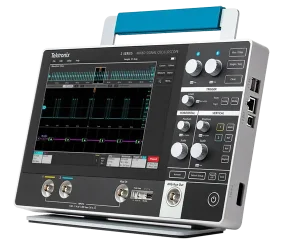






Modern electronic systems demand clean, highly regulated, and dynamically adaptable direct current (DC) and alternating current (AC) sources. China's manufacturing ecosystem has evolved from producing entry-level linear benchtop units to engineering world-class, wide-bandgap, bidirectional regenerative power solutions for mission-critical ATE environments.
Contemporary programmable DC power supplies feature 16-bit to 24-bit digital-to-analog converters (DACs), enabling readback accuracy within 0.02% + 2 mV. High-frequency digital feedback loops eliminate overshoot during abrupt microsecond load transitions, ensuring sensitive semiconductors, FPGAs, and ASICs are never subjected to destructive transients.
Unlike traditional rectangular output envelopes limited to fixed maximum voltage and current, modern Chinese programmable power supplies utilize autoranging technology. A single 1.5 kW or 3 kW autoranging chassis delivers an expansive operational envelope—spanning high-voltage/low-current to low-voltage/high-current regimes—effectively replacing three conventional fixed-range units.
Energy efficiency is paramount for enterprise testing centers. State-of-the-art bidirectional programmable DC supplies operate seamlessly across two quadrants—functioning as both an active source and an electronic regenerative load. When sinking power during battery discharge or EV motor deceleration testing, up to 96% of kinetic/chemical energy is recycled cleanly back into the local three-phase AC facility grid.
Global test instrument procurement requires predictable lead times, transparent bill-of-materials (BOM) auditing, and high component reliability. The Greater Bay Area and Yangtze River Delta clusters provide unprecedented manufacturing cohesion.
Proximity to world-leading semiconductor packaging houses and planar magnetic component fabricators allows Chinese power supply manufacturers to pioneer commercial Silicon Carbide (SiC) and Gallium Nitride (GaN) switching bridges. This vertical integration slashes switching thermal losses by 40% and achieves rack-mount form factors down to 1U for 3 kW and 3U for 15 kW.
Turnaround times for custom mechanical enclosures, specialized rear-panel terminal busbars, and custom firmware revisions are condensed from months to business days. Industrial clients can request custom front-panel layouts, specialized CANopen/Modbus communication cards, or multi-channel master-slave synchronization cables with rapid tooling.
To safeguard international shipments against infant mortality failures, advanced facilities deploy automated full-load thermal burn-in stress screening. Every production unit undergoes minimum 72-hour elevated-temperature chamber validation (40°C–50°C) combined with cyclical full-voltage full-current surge profiles before calibration inspection.
International test architects must evaluate trade-offs between ripple/noise, energy efficiency, transient response, and capital expenditure. The table below delineates primary programmable power supply topologies available from qualified manufacturers.
| Architecture Topology | Typical Voltage / Current Range | Ripple & Noise (RMS) | Conversion Efficiency | Dynamic Response | Primary Industrial Use-Case |
|---|---|---|---|---|---|
| Linear Regulated DC Supply | 0–60 V / 0–10 A (Up to 500 W) | < 350 µVrms / 2 mVpp | 40% – 55% (High heat dissipation) | < 15 µs (Ultra-fast) | Low-Noise RF & Audio IC Testing |
| High-Frequency Switching DC | 0–1500 V / Up to 1000 A (1 kW–100 kW) | 10 mV – 50 mVrms | 88% – 93% (Fan/water cooled) | 50 µs – 150 µs | General Production Line ATE & Burn-In |
| Bidirectional Regenerative DC | 0–2250 V / Up to 2040 A (Parallelable to MW) | 20 mV – 80 mVrms | 95% – 96.5% (Dual-Quadrant) | < 1 ms (Seamless Source-to-Sink) | EV Battery Pack Emulation & Inverters |
| Programmable AC & Grid Simulators | 0–350 VL-N / 15 Hz–2000 Hz (Harmonic Synth) | THD < 0.3% at 50/60 Hz | 86% – 90% (Matrix Inverter) | < 100 µs (Phase Angle Control) | Solar Inverter Anti-Islanding & Avionics |
To ensure plug-and-play integration into existing LabVIEW, Python, MATLAB, and C# automated test suites, instruments are standardly built with SCPI (Standard Commands for Programmable Instruments) over USB-TMC, LAN (LXI Core 2011 compliant with built-in web servers), RS-232, and optional IEEE-488.2 GPIB interfaces.
Safety and device-under-test (DUT) protection are foundational. Industrial programmable power sources integrate ultra-fast hardware-level Over-Voltage Protection (OVP < 10 µs), Over-Current Protection (OCP), Over-Power Protection (OPP), and Emergency Stop (E-Stop) dry contacts rated for SIL-2 / PL-d machinery safety integration.
Addressing scalable mega-watt demands in electric vehicle (EV) battery testing, smart optical-fiber master-slave paralleling protocols allow up to 64 units to connect in parallel or series without degradation in dynamic response. Active current-sharing circuits ensure less than 1% variance between interconnected power modules.
The confluence of high-voltage electric mobility, renewable energy microgrids, and intelligent automated test architectures is reshaping power instrument design parameters.
Next-generation DC power modules leverage GaN power stages operating at switching frequencies up to 500 kHz. This yields programmable voltage slew rates exceeding 500 V/ms with zero ringing, unlocking precise reproduction of automotive ISO 16750-2 cold-crank surges and avionics MIL-STD-704F abnormal DC transient profiles.
Leading programmable supplies now incorporate hardware-integrated digital signal processors (DSP) capable of rendering custom 64,000-point arbitrary waveforms without bus latency. Engineers can simulate complex power disturbances, solar cell I-V curve shadowing per EN 50530, or battery state-of-charge (SoC) curves directly onboard.
Predictive maintenance telemetry continuously monitors internal thermal sensors, DC-link electrolytic capacitor health, fan speeds, and incoming phase stability. Through REST APIs and MQTT interfaces, power supplies transmit health metrics to plant cloud platforms, preventing unscheduled line-down catastrophes before they occur.
From automotive gigafactories to aerospace test benches, examine how programmable power supplies deliver exact repeatability in demanding testing regimes.
High-voltage battery simulators (800 V to 1500 V) emulate individual cell impedance, thermal drift, and charging/discharging curves. Used to validate 400V/800V silicon carbide traction inverters, on-board chargers (OBC), and BMS contactor safety disconnect logic under extreme fault simulations.
Regenerative grid simulators and solar array emulators simulate complex multi-channel maximum power point tracking (MPPT) conditions. Validates grid-tied solar inverters, energy storage system (ESS) PCS modules, and anti-islanding compliance in strict accordance with IEEE 1547 and UL 1741.
Programmable AC/DC power supplies generate variable frequency 400 Hz and 800 Hz avionics power profiles. Precision transient injections simulate lightning strikes, engine ignition brownouts, and frequency dropouts per RTCA/DO-160G and Boeing/Airbus electrical airframe standards.
Multichannel high-density DC power arrays supply pure, ultra-low ripple voltage rails to burn-in ovens and wafer probe stations. Fast hardware OCP latching prevents thermal runaways in complex System-on-Chip (SoC) test sockets during high-temperature operating life (HTOL) qualification.
International deployments require verifiable regulatory conformity, certified calibration standards, and round-the-clock technical accountability to maintain high uptime.
All industrial programmable power supplies provided through our export network are fully compliant with Low Voltage Directive (LVD) 2014/35/EU, EMC Directive 2014/30/EU, EN/IEC 61010-1 electrical safety for laboratory equipment, and UL 61010-1 for North American installations. Full Technical Construction Files (TCF) and Declaration of Conformity (DoC) certificates accompany every consignment.
Every instrument is calibrated in temperature- and humidity-controlled metrology environments utilizing Fluke 5730A/8588A reference standards. Certificates of Calibration detailing measurement uncertainty, test point readbacks, and traceability to National Institute of Metrology (NIM), NIST, or regional signatories of the ILAC-MRA are included with serial-number matching.
Through strategic logistical hubs across Hong Kong, Shenzhen, and partner forwarders across Europe, North America, and Southeast Asia, clients benefit from rapid Field Application Engineer (FAE) remote support, remote firmware patching, modular power-brick replacement options, and guaranteed depot-level turnaround within 7 to 10 business days.
Direct answers to core procurement, integration, calibration, and operational questions encountered by test leads and purchasing managers.
A conventional fixed-range supply outputs its maximum rated power at only one specific point (Vmax and Imax). In contrast, an autoranging power supply automatically balances voltage and current along a constant power curve. For example, a 3 kW autoranging unit can supply 300 V at 10 A, 150 V at 20 A, or 75 V at 40 A, offering massive test flexibility for diverse DUT requirements without purchasing multiple dedicated supplies.
Traditional electronic loads dissipate 100% of the DUT energy as resistive heat inside the test bay, which drives up industrial HVAC cooling electrical loads. Regenerative bidirectional DC supplies invert the incoming DC energy into synchronous three-phase AC power with > 95% efficiency, feeding power back into the local factory substation and dramatically lowering net kilowatt-hour consumption.
Yes. Most advanced Chinese programmable power units offer SCPI command compatibility modes and industry-standard VISA drivers (compatible with NI-VISA and Keysight IO Libraries). Many models feature command emulation configurations directly in the system settings, allowing them to parse legacy Chroma, Agilent, or Sorensen SCPI syntax without rewriting existing ATE software.
All high-performance units feature dedicated 4-wire Kelvin remote sense terminals (+Vsense, -Vsense). By routing twisted-pair shielded sense leads directly to the DUT input terminals, internal op-amp control loops automatically compensate for line drops up to several volts, maintaining precise regulation directly across the load terminals despite high dynamic current surges.
Due to centralized parts warehousing and automated SMT manufacturing in Shenzhen and surrounding tech corridors, standard rack units (1 kW to 15 kW) typically maintain inventory readiness or require only 2 to 4 weeks production lead time. This contrasts sharply with legacy Western lead times that frequently extend between 16 and 32 weeks.
Shipments are handled according to ISTA-3A shock and drop vibration protocols, utilizing high-density custom foam inserts inside multi-layer export-grade wooden crating with internal moisture-barrier desiccant bags. Comprehensive export documentation includes full commercial invoices, HS code classifications (typically 9030 or 8504), certificates of origin, and traceability reports.
Complete your automated test benches with world-standard oscilloscopes, spectrum analyzers, calibrators, and high-frequency RF instrumentation.







