Explore our inventory of factory-original, fully traceable measurement instruments, compliance analyzers, and digital signal platforms backed by factory warranties and calibration certification.
How the proliferation of wide bandgap power electronics, distributed energy resources (DER), and international compliance certification is redefining modern AC power supply requirements.
Alternating Current (AC) power supplies have evolved from basic variable transformers and rudimentary linear regulators into sophisticated, microcomputer-controlled programmable power systems capable of synthesizing arbitrary waveforms, simulating complex microgrid disturbances, and sinking excess regenerative energy back into the distribution grid. In modern industrial ecosystems, AC power supplies serve as the vital baseline test equipment for product safety, electromagnetic compatibility (EMC), energy efficiency qualification, and dynamic environmental stress screening.
As an established China AC power supply supplier and turnkey instrumentation provider, we operate at the nexus of high-density power electronics manufacturing and ultra-precise test engineering. Contemporary electronic products—ranging from electric vehicle on-board chargers (OBC) and smart heat pumps to enterprise AI server power distribution units (PDUs)—are mandated to conform to increasingly stringent international regulatory frameworks including IEC 61000-3-2 (harmonic current emissions), IEC 61000-4-11 (voltage dips, short interruptions, and voltage variations immunity), and regional standards such as EN 50549 for utility grid interconnections.
The global shift toward high-voltage direct current (HVDC) architectures, distributed photovoltaic (PV) generation, and bidirectional Vehicle-to-Grid (V2G) power interfaces has exposed critical testing bottlenecks. Traditional unidirectional linear sources lack the power density and sink capabilities to stress modern grid-tied inverters. Consequently, the commercial demand has violently pivoted toward four-quadrant regenerative grid simulators that act simultaneously as high-fidelity programmable AC sources and electronic loads, slashing thermal footprint and energy expenditure by recycling over 90% of test power back to the local mains.
Evaluating the trade-offs between linear amplifier topologies, high-frequency switching PWM designs, and four-quadrant regenerative architectures across demanding laboratory environments.
Utilizing high-power operational stages operating in class AB linear modes, these sources deliver pristine, noise-free sinusoidal power. Characterized by unmatched transient response times (<10 µs) and sub-0.1% THD, they represent the gold standard for high-end acoustic testing, medical sensor verification, and ultra-sensitive RF calibration.
Leveraging high-frequency Pulse Width Modulation driven by advanced FPGA digital control loops. Switching AC power supplies combine remarkable physical power density (up to 15 kVA in a compact 3U chassis) with high operating efficiency (>88%), making them the workhorse solution for consumer appliance burn-in and large factory ATE racks.
The cutting edge of grid simulation. Integrating bidirectional Active Front End (AFE) modules and Silicon Carbide (SiC) switching matrices, these systems seamlessly transition between source and sink modes. They synthesize arbitrary grid anomalies while sinking feedback current from solar inverters or EV regenerative drivetrains without dissipating extreme heat.
| Architecture Class | THD (Sine Wave) | Efficiency | Power Density | Bidirectional / Sink | Relative Hardware Cost |
|---|---|---|---|---|---|
| Linear AC Power Source | < 0.1% - 0.2% | 40% - 55% | Low (Heavy Magnetics) | No (Pure Source) | High (per kVA) |
| Switching PWM Power Source | 0.3% - 0.5% | 85% - 89% | High (Up to 15kVA / 3U) | Limited (Resistive Dissipation) | Medium / Competitive |
| Regenerative Grid Simulator | < 0.3% | 90% - 94% | Ultra-High (SiC Enhanced) | Full 4-Quadrant Bidirectional | Optimized for Lifecycle OPEX |
From aerospace defense frequencies to grid-tie certification, discover how our AC power sources interface with complex testing regimes worldwide.
Verifying On-Board Chargers (OBC), EVSE charging stations, and wireless inductive transfer pads. Programmable AC supplies simulate real-world voltage sags, phase drops, and harmonic pollution under SAE J1772, ISO 15118, and GB/T 18487.4 compliance protocols.
Supplying variable 350 Hz – 800 Hz "wild frequency" aircraft power as well as nominal 400 Hz 115V AC single-phase and three-phase sources. Compliant with MIL-STD-704F, RTCA/DO-160G (Section 16), and Airbus ABD0100.1.8 electrical immunity standards.
Testing anti-islanding mechanisms and Low Voltage Ride-Through (LVRT) behavior. Our regenerative sources reproduce phase-jump angles, frequency drift (45 Hz – 65 Hz), and high-order inter-harmonics required by IEEE 1547 and UL 1741 SA grid interconnect testing.
Enabling multi-national power emulation (100V 50Hz, 120V 60Hz, 230V 50Hz) within a single automated test rack. Crucial for verifying variable-speed HVAC systems, switched-mode power supplies, and IoT devices against brownout interruptions.
Analyzing key paradigm shifts in power conversion topologies, wide-bandgap adoption, and automated cloud-managed test environments heading toward 2030.
Silicon Carbide power modules replace legacy IGBT switches, elevating internal PWM carrier frequencies from 20 kHz to beyond 150 kHz. This yields dramatic reductions in magnetics volume, sharper rising edge slew rates (>150 V/µs), and THD < 0.2%.
Interfacing AC programmable supplies directly with digital real-time simulators (OPAL-RT, RTDS). Low-latency analog control inputs allow power-hardware-in-the-loop (PHIL) testing of actual physical smart grid components under simulated macro-grid faults.
Machine learning algorithms analyze field-captured grid disturbance logs (fault recorders, PQ meters) and automatically program AC sources to mirror non-linear real-world transients, eliminating manual waveform mathematical modeling for validation engineers.
Transitioning toward modular multilevel converters (MMC) capable of direct medium-voltage AC output (up to 10 kV) for direct validation of wind turbine converters, locomotive traction inverters, and heavy-duty grid-scale energy storage platforms.
How China's premier instrumentation supply chain delivers integrated, high-capacity Automated Test Equipment (ATE) frameworks tailored for maximum factory throughput.
Sourcing individual AC power supplies solves only one dimension of modern production challenges. High-volume manufacturing facilities require comprehensive Automated Test Equipment (ATE) integration where AC programmable sources, regenerative electronic loads, multichannel data acquisition (DAQ) modules, and precision power analyzers collaborate synchronously under a centralized automation bus (GPIB, USB-TMC, LAN/LXI, EtherCAT).
As a specialized China test equipment aggregator and supplier, Machine-Win provides turnkey system-level engineering. We bridge the gap between top-tier global instrument manufacturers—including Keysight, Rohde & Schwarz, Keithley, and Tektronix—and tailored power delivery racks. Our industrial solutions include:
Equipped with regenerative AC sources to cycle power adapters, inverters, and automotive ECUs continuously for 72+ hours while reclaiming over 90% of electricity costs.
Combining ultra-low distortion linear/hybrid AC power sources with spectrum analyzers and LISN networks to guarantee flawless CE/FCC compliance testing prior to formal certification.
Consolidating multi-brand instrumentation procurement into a single export consignment, complete with factory calibration records (ISO/IEC 17025) and pre-shipment video verification.
Consult with our senior application engineers to specify voltage envelopes, dynamic transient response speeds, and multi-channel synchronization options for your testing facility.
In-depth technical answers addressing topology selection, compliance certification, total cost of ownership (TCO), and global delivery protocols.
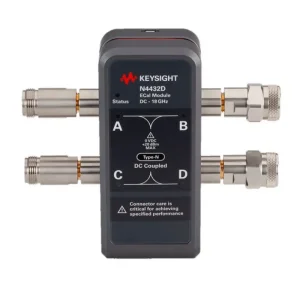
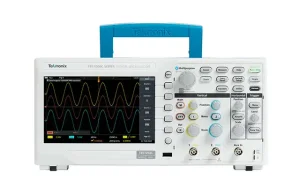
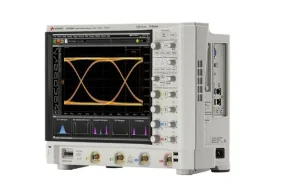
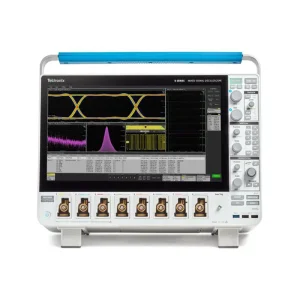
Complete your automated test rack with industry-leading spectrum analyzers, mixed-signal oscilloscopes, and traceable calibration standards.