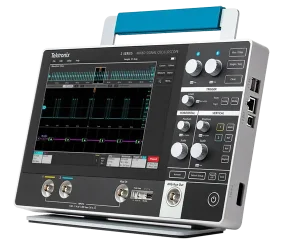
Explore our industrial-grade multi-instrument lineup featuring verified metrological standards, vector analyzers, and high-precision calibration systems configured for mission-critical operations.


Navigating the shift toward dynamic two-pressure multi-point calibration, in-situ validation protocols, and sub-percent relative humidity measurement uncertainties.
Traditional single-saturator baths are being replaced by automated two-pressure, two-temperature dual-path systems capable of continuous RH control across wide thermal bands (-40°C to +85°C) without thermodynamic condensation artifacts.
Chilled mirror optical hygrometers represent the fundamental tier for primary humidity transfer. Emerging metrological architectures incorporate continuous self-cleaning optical cycles and Peltier multi-stage arrays to verify dew point drifts down to ±0.1°C FP/DP.
Modern factories demand real-time process monitoring. Hybrid wireless data-logging generators allow fast validation in controlled cleanrooms and semiconductor wafer fabs, cutting field downtime by up to 65% relative to off-site chamber extraction.
Enterprise procurement professionals require verifiable calibration chains, multi-brand compatibility, and end-to-end supply stability.
Global suppliers must deliver equipment with certificates traceable to national institutes (NIST, NPL, PTB), complete with calculated measurement uncertainty budgets for immediate QA onboarding.
Procuring fast-stabilizing humidity chambers (reaching equilibrium in under 3 minutes per set point) cuts sensor batch test overheads, lowering operational expenditures across high-volume production cycles.
Global procurement teams prioritize single-source suppliers capable of supplying multi-brand ecosystems—spanning RF electronics, process calibration tools, and benchtop standards under unified contracts.
Chamber ports must accommodate mixed probe geometries, capacitive hygrometer arrays, and resistive transmitters without thermal bridging or seal degradation over repeated multi-shift test regimens.
Turnkey calibration architectures deployed across critical sectors where thermal-humidity precision determines regulatory compliance and operational safety.
Validation of warehouse environmental monitoring networks, stability test chambers, and lyophilization suites. Solutions include tamper-proof electronic records, multi-sensor calibration profiles, and audit-ready data logs.
Preventing electrostatic discharge (ESD) and photoresist distortion requires stable humidity environments. Portable calibrators ensure fast verification of RH sensors across ISO Class 1 to 5 production bays.
Verification of altitude test chambers, engine test sensors, and air-data computer instruments. Combines high-precision pitot-static pressure calibration with dew-point validation across sub-zero flight conditions.
Operational centers in Hong Kong, Shenzhen, and Nanchang provide international logistics, strict inspection protocols, and metrological lifecycle support.
Every unit undergoes serialized pre-dispatch functional testing. High-resolution photographic and video confirmation of serial labels and physical assets is provided before cargo release.
Precision calibration standards are packaged in custom-engineered flight cases and reinforced shock-isolated export containers, protecting optoelectronic alignments during long-haul transit.
Full support for factory calibration reports, accreditation certificates, and customs compliance documentation, simplifying entry and onboarding for international laboratories.
Our dedicated engineering teams provide component-level diagnostics, firmware updates, sensor recalibration, and spare-part fulfillment to protect long-term equipment value.
Strategic advancements driving next-generation humidity generation, spectroscopic validation, and automated edge intelligence.
Cavity Ring-Down Spectroscopy (CRDS) and Tunable Diode Laser Absorption Spectroscopy (TDLAS) are enabling direct sub-ppm moisture detection without physical carrier gas saturation, reducing trace-level calibration cycle times.
Miniaturized silicon resonators with embedded dew-point heating cycles are moving from labs into manufacturing lines, delivering multi-point thermal compensation algorithms directly on internal processing dies.
Machine-learning models integrated into benchtop calibrators track environmental shifts and chamber historical data, predicting calibration intervals and flagging anomalies before hardware deviations affect QA metrics.
Metrology standards, procurement procedures, and calibration best practices answered by Machine-Win application engineers.
Primary standards, like chilled-mirror hygrometers or gravimetric hygrometers, derive moisture measurements directly from physical constants (thermodynamic temperature and condensation pressure). Secondary instruments, such as capacitive thin-film polymer hygrometers, require comparative calibration against primary transfer standards.
All instruments shipped by Machine-Win are 100% brand-new and original, accompanied by authentic serial numbers, factory certificates, and original accessories. We verify all configurations and provide full visual inspection records prior to international shipment.
Most manufacturers recommend a 12-month recalibration cycle. In critical sectors like pharmaceutical cleanrooms and semiconductor production, bi-annual in-situ validations or rolling three-point spot checks help maintain process integrity.
Yes. We leverage our network of 2,000+ certified supply partners to deliver consolidated packages, combining RF vector analyzers, oscilloscopes, pressure calibrators, and environmental chambers into single-source purchase orders.
Complete your facility test bench with top-tier parameter analyzers, high-speed oscilloscopes, and specialized pressure and power test units.