Metrology & Industrial Testing Intelligence

China Concrete Resistivity Test Manufacturers & Suppliers

Precision Electrochemical Impedance, Four-Probe Wenner Array Instruments, and High-Bandwidth Metrology Solutions Engineered for Resilient Infrastructure and Global Laboratory Compliance.

Precision Instrumentation Showcase

High-Accuracy Testing & Diagnostic Platforms

Original instruments, digitizers, and signal characterization analyzers calibrated for structural testing laboratories, material resistivity diagnostics, and automated test benches worldwide.


China Keysight Infiniium MXR108B B-Series Oscilloscope
Keysight Series
Keysight Infiniium MXR108B 8-Channel 1 GHz Oscilloscope
View Specification
China Tektronix Low Profile 5 Series MSO MSO58LP
Tektronix Lab
Tektronix Low Profile 5 Series MSO - MSO58LP Platform
View Specification
Rohde & Schwarz EVSG1000 Signal Analyzer
R&S High Speed
R&S®EVSG1000 Ultra-Precise Speed & Accuracy Analyzer
View Specification
Rohde & Schwarz NGP800 series R&S NGP814 Power supply
R&S Power Bench
Custom Rohde & Schwarz NGP800 Series R&S®NGP814 Supply
View Specification
Tektronix TBS2000B Digital Storage Oscilloscope
Tektronix Acquisition
Tektronix TBS2000B Digital Storage Oscilloscope (TBS2072B+)
View Specification
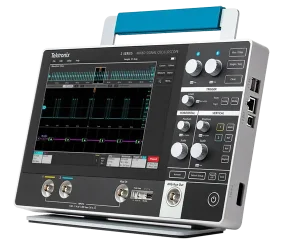
Tektronix MSO Mixed Signal Portable Oscilloscope 2 Series
Field Diagnostics
Tektronix MSO Mixed Signal Portable Series (MSO22/MSO24)
View Specification
Tektronix Isolated Current Probes IsoVu TICP100
Precision Sensor
Tektronix Isolated Current Probes (IsoVu™ TICP100/TICP050)
View Specification
Tektronix Mixed Domain Oscilloscope MDO4000C
Multi-Domain Domain
Tektronix Mixed Domain Scope MDO4000C (MDO4014 - MDO4104)
View Specification
Industry Technical Whitepaper

Concrete Electrical Resistivity Metrology: State of the Art

A comprehensive review of electrochemical transport phenomena, Wenner four-point electrode configurations, bulk conductivity protocols, and non-destructive testing (NDT) standards reshaping modern civil engineering.

Electrochemical Fundamentals

Concrete electrical resistivity (ρ, in Ω·m) directly reflects the pore network microstructure, connectivity, tortuosity, and chemical composition of the internal pore solution. Based on Archie's Law and the Nernst-Planck electro-diffusion relation, resistivity operates as an immediate surrogate for fluid diffusivity and ion permeability.

Unlike slow mechanical migration, electrical current carried through ions (Na+, K+, Ca2+, OH-, SO42-) quantifies concrete resistance against corrosive chemical ingress within seconds.

Surface vs. Bulk Testing Metrology

The industry is anchored by two premier test setups: the Wenner 4-Probe Array (AASHTO T 358) and Bulk Uniaxial Resistivity (ASTM C1876). The Wenner array injects alternating current (AC) at variable frequencies (typically 13 Hz to 1 kHz) across outer pins while measuring potential drop across inner pins to prevent electrode polarization.

Bulk testing applies plate electrodes to saturated cylinder ends, isolating geometric cell constants without local surface aggregate bias.

Replacing Destructive RCPT Testing

The historical ASTM C1202 Rapid Chloride Permeability Test (RCPT) imposes 60V over 6 hours, frequently generating Joule heating that alters pore structures and produces false positives in silica-fume mixes.

Modern electrical resistivity instruments provide 99% correlation to ASTM C1202 coulombs while completing measurements in under 5 seconds, slashing laboratory testing overhead by up to 90% and eliminating toxic chemical waste.

Evaluation Parameter Surface Wenner Array (AASHTO T 358) Bulk Resistivity (ASTM C1876 / C1760) Legacy RCPT (ASTM C1202)
Test Duration < 3 Seconds < 5 Seconds 6 Hours Continuous
Specimen Impact 100% Non-Destructive (In-situ / Lab) Non-Destructive (Core / Cylinder) Destructive / Thermal Alteration
Measurement Range 0.1 Ω·m to 100 kΩ·m 1 Ω·m to 50 kΩ·m 100 to 10,000+ Coulombs
Rebar Interference Sensitivity Moderate (Requires orthogonal scan) None (Standard core required) High (Rebar must be excluded)
Operating Operating Cost Virtually Zero Consumables Moist sponge / conductive pads Chemical Reagents (NaOH, NaCl)
Market Dynamics

Global Enterprise Sourcing & Procurement Demands

How international EPC contractors, departments of transportation (DOTs), and structural health monitoring (SHM) engineers evaluate concrete resistivity instrument suppliers.

100-Year Life Expectancy Verification

Global megaprojects—such as trans-oceanic crossings, offshore LNG facilities, and subsea tunnels—mandate 100+ year service lives under harsh chloride attack. Procurement authorities require test equipment compliant with Fick's Second Law models (Life-365, Stadium), demanding certified precision, variable excitation frequencies, and NIST-traceable calibration certificates.

Digital Traceability & IoT Architecture

Modern engineering contracts require immediate data ingestion into BIM (Building Information Modeling) pipelines. Tier-1 contractors evaluate suppliers based on Bluetooth/Wi-Fi telemetry, GPS geo-tagging of test points, temperature-compensated algorithms, and cloud integration for instant QA/QC verification directly from the pouring site.

High-Mix Precast Quality Control

Precast concrete manufacturers process thousands of segments per week. Procurement focuses on ruggedized handheld probes with auto-contact detection, rapid electrode tip replacement, and compliance with ASTM C1876 protocols to approve strip-form stripping and dispatch timelines without waiting 28 days for compressive break tests.

China Factory 4.0 Excellence

Precision Manufacturing & Supply Chain Resilience

Combining advanced microelectronics manufacturing, automated multi-point calibration, and strategic global sourcing to deliver world-class test & measurement reliability.

Shenzhen Electronics Cluster

Centrally positioned in Shenzhen's Bao'an high-tech corridor, manufacturing partners leverage direct access to precision SMUs, multi-layer high-impedance PCBs, and military-grade enclosure manufacturing, reducing design-to-production cycles by 65%.

ISO 17025 Automated Calibration

Every instrument undergoes automated multi-decade resistance verification using precision decade boxes and impedance standards from 0.1 Ω to 10 MΩ, guaranteeing phase accuracy and low-noise electrode potential stability across all humidity ratings.

Tier-1 Strategic Sourcing

With an active network of over 2,000 qualified component suppliers and strategic partnerships across Hong Kong and Shenzhen, our instrument ecosystem integrates brand-new, original benchmark measurement chips with traceable supply chain provenance.

Global Logistics & Fast Dispatch

Comprehensive shock-protected export packing, international customs clearance documentation, and direct multimodal air freight from Hong Kong and Shenzhen ensure rapid, safe delivery to testing labs in more than 100 countries.

100+
Countries & Regions Served
< 0.5%
Measurement Uncertainty
2,000+
Supply Chain Partners
24/7
Field Engineering Support
Field Implementation

Mission-Critical Engineering Scenarios

Real-world testing applications where non-destructive electrical resistivity testing delivers decisive insights into concrete durability and structural preservation.

Coastal Bridges & Marine Wharves

In tidal and splash zones, sea salts penetrate concrete cover via capillary absorption and diffusion. Four-probe Wenner surface resistivity measurements detect early chloride diffusion fronts well before passive rebar oxide layers degrade, allowing asset managers to deploy hydrophobic sealants or cathodic protection decades before spalling occurs.

  • Correlation to AASHTO T 358 chloride ingress
  • In-situ mapping of splash zone vulnerability
  • Elimination of coring damage on post-tensioned piers

High-Speed Rail Viaducts & Track Slabs

High-speed rail structures require extreme resistance against stray current corrosion induced by DC/AC traction systems. High-frequency electrical resistivity profiling evaluates the bulk resistance of ballastless track slabs, ensuring adequate electrical isolation between rails and steel reinforcement.

  • Assessment of trackbed stray current leakage risks
  • Verification of supplementary cementitious materials (SCMs)
  • Quality assurance across thousands of precast sleepers

Nuclear Containment & Tunnel Linings

Secondary containment vessels and deep underground subways demand non-permeable mass concrete with zero micro-crack development. In-situ resistivity loggers coupled with multi-channel digitizers monitor hydration development, cure progress, and autogenous shrinkage in real time without destroying test cylinders.

  • Hydration kinetics and early pore structure evolution
  • Continuous monitoring of segmental tunnel lining segments
  • Long-term life prediction under hydrostatic pressures
Advanced Measurement Systems

Precision Signal, Power & Calibration Instruments

Explore our extended portfolio of laboratory calibrators, modular PXIe digitizers, DC power analyzers, and multi-channel oscilloscopes supplied with full factory warranties.


Wholesale Druck DPI 611 Handheld Pressure Calibrator
Druck Field
Druck DPI 611 Handheld Pressure Calibrator (Precision Sourcing)
View Specification
Wholesale keysight 500 MHz Oscilloscope M9242A PXIe
Keysight Modular
Keysight 500 MHz Oscilloscope M9242A PXIe High-Speed Module
View Specification
Custom keysight N6705C DC Power Analyzer
Keysight Power
Keysight N6705C Modular DC Power Analyzer & Precision SMU
View Specification
Tektronix MSO Mixed Signal Oscilloscope 4 Series B MSO44B MSO46B
Tektronix 4 Series
Tektronix MSO 4 Series B (MSO44B / MSO46B) Mixed Signal
View Specification
Tektronix TBS1000C Digital Storage Oscilloscope TBS1052C
Tektronix General
Tektronix TBS1000C Digital Scope (TBS1052C / TBS1102C)
View Specification
China Rohde & Schwarz R&S RTH1004 Scope
R&S Rugged Field
Rohde & Schwarz R&S®RTH1004 Handheld 4-Channel Oscilloscope
View Specification
Keysight E5270B 8-Slot Precision Measurement Mainframe
Keysight Mainframe
Keysight E5270B 8-Slot Mainframe with Precision IV Analyzers
View Specification
Rohde & Schwarz FSWPA Phase Noise Analyzer
R&S Phase Noise
Rohde & Schwarz R&S®FSWPA Ultra-Low Noise Signal Analyzer
View Specification
Technical Clarifications

Concrete Resistivity Testing: Frequently Asked Questions

In-depth responses from materials engineers on measurement accuracy, environmental compensation, standard adherence, and procurement logistics.

How does surface electrical resistivity correlate to ASTM C1202 RCPT coulombs?
According to extensive Department of Transportation (DOT) testing and AASHTO TP 95 / T 358 criteria, an inverse power relationship exists between concrete surface resistivity and Rapid Chloride Permeability Test (RCPT) charges. High permeability concrete (>4,000 Coulombs) corresponds to resistivity values below 12 kΩ·cm (Wenner array 38 mm probe spacing on 100 × 200 mm cylinders). Moderate permeability (2,000 to 4,000 Coulombs) equates to 12–21 kΩ·cm; low permeability (1,000 to 2,000 Coulombs) corresponds to 21–37 kΩ·cm; and very low permeability (<1,000 Coulombs) aligns with resistivity values above 37 kΩ·cm. Surface resistivity achieves this with >0.95 coefficient of determination without heating or destroying the sample.
How do internal reinforcing bars (rebar) affect in-situ Wenner 4-probe measurements?
Steel reinforcing bars possess an electrical conductivity approximately 107 times higher than the surrounding concrete matrix. If a Wenner array is placed directly parallel to a shallow rebar, electrical current preferentially short-circuits through the steel, artificially depressing the apparent resistivity reading by 50% to 80%. To eliminate rebar interference, engineers must locate reinforcement grids using electromagnetic rebar locators or ground penetrating radar (GPR). The Wenner probe should be positioned diagonally across rebar mesh squares or perpendicularly midway between bars, ensuring cover depth exceeds 1.5 times the probe pin spacing.
Why is temperature and moisture normalization essential for concrete resistivity?
Electrolyte conductivity in porous media increases with temperature at approximately 3% to 5% per °C due to reduced pore fluid viscosity and increased ionic mobility. Testing standards mandate normalization to a reference temperature of 21°C (or 23°C) utilizing the Arrhenius relationship (ρ21 = ρT · exp[E/R · (1/T − 1/294.15)]). Furthermore, measurements must only be performed under standard saturated-surface-dry (SSD) conditions. Partially dried concrete exhibits vastly inflated resistivity due to disconnected capillary channels. Advanced instruments integrate built-in infrared surface thermometers to compute real-time normalized values automatically.
What excitation frequency should concrete resistivity meters use to prevent electrode polarization?
Applying direct current (DC) creates rapid electrochemical polarization at the electrode-concrete contact boundary, forming a capacitive double layer that distorts voltage drops. Precision resistivity instruments therefore operate with alternating current (AC). Standard square or sinusoidal frequencies range between 13 Hz and 1 kHz. Below 10 Hz, partial electrode polarization still occurs; above 10 kHz, phase angle shifts and stray capacitive coupling with the matrix introduce reactive errors. Multi-frequency Electrochemical Impedance Spectroscopy (EIS) analyzers isolate true bulk ohmic resistance (Rbulk) at the zero-phase real impedance intercept on a Nyquist plot.
How does Machine-Win guarantee equipment authenticity, calibration, and global compliance?
Machine-Win Technology Co., Ltd. supplies 100% brand-new, original instruments featuring traceable manufacturer serial numbers, full factory documentation, and standard warranties. Before export dispatch from our Shenzhen or Hong Kong facilities, our technical engineering team performs rigorous verification of serial plates, firmware revisions, and accessory sets. On-demand ISO/IEC 17025 accredited calibration reports, video inspection streams, and specialized shock-absorbing export packaging ensure complete compliance for international laboratories and infrastructure projects.