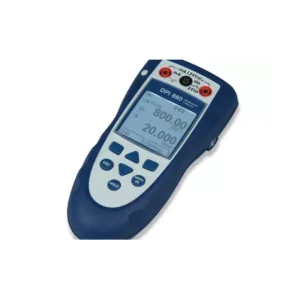
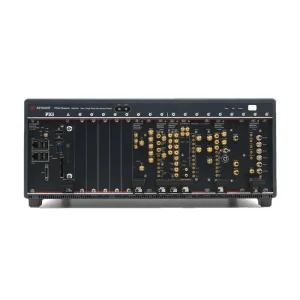
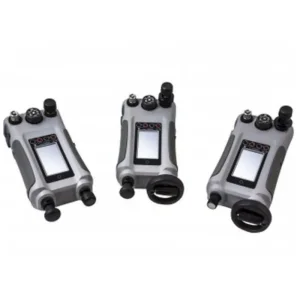
Rapid-deployment calibrators and signal analyzers configured for real-time thermal loop verification, telemetry, and critical process loops in the Salto industrial ecosystem.
Salto stands as a strategic industrial nerve center along the Uruguay River basin. Characterized by colossal energy generation at the Salto Grande Hydroelectric Complex, coupled with intensive citrus processing, blast-freezing logistics, and emerging bio-refining facilities, the region operates under rigorous thermal tolerances governed by national metrological frameworks (LATU) and international trade compliance mandates.
Demands continuous ±0.05°C bearing & stator oil bath monitoring to avert cavitation and catastrophic mechanical failure.
Strict axial and radial thermal equilibrium threshold required for on-site verification of Pt100/Pt1000 RTD arrays.
Spans cryogenic citrus freezing tunnels up to high-pressure thermal power turbine steam lines across Salto plants.
Essential conformity for agricultural and pharmaceutical exports cleared through Mercosur, US FDA, and EU standards.
At the binational Salto Grande generation plant, turbine main thrust bearings, stator windings, and transformer oils experience severe electro-mechanical friction. Calibration technicians require portable micro-baths and dual-channel temperature calibrators capable of simulating Type J, K, and T thermocouples alongside 4-wire RTD configurations right on the turbine deck.
As Uruguay's epicenter for citrus fruit cultivation and juice concentrate processing, Salto facilities rely on automated pasteurizers, flash-freezing spirals, and controlled-atmosphere storage chambers. A temperature deviation exceeding 0.3°C leads to premature fruit senescence or enzymatic degradation, mandating routine in-situ calibration cycles.
Industrial operations exporting from Salto are subject to rigorous audits by LATU (Laboratorio Tecnológico del Uruguay) and international bodies. Deploying calibrators with traceable ISO/IEC 17025 certification guarantees that sensor calibration offsets, hysteresis curves, and uncertainty budgets comply fully with the International Temperature Scale of 1990 (ITS-90).
China's state-of-the-art precision instrument fabrication centers have transitioned from standard OEM manufacturing to global leaders in metrological innovation. By fusing advanced thermal core metallurgy, multi-stage thermoelectric Peltier cascades, and AI-driven PID algorithms, Chinese exporters provide Salto's industrial engineers with unrivaled metrological precision at optimized capital costs.
| Metrological Dimension | Legacy Western Instrument Suppliers | Advanced Chinese Factory Exporters | Impact on Salto Industrial Facilities |
|---|---|---|---|
| Thermal Core Architecture | Conventional single-zone brass/aluminum blocks with slow ramp times. | Multi-zone quad-heater cores with isotropic dynamic heat flux equalization. | Reduces stabilization waiting times by 45% during field audits at Salto power stations. |
| Temperature Uniformity | Radial gradient: ±0.035°C; Axial gradient (40mm): ±0.04°C. | Radial gradient: ±0.010°C; Axial gradient (40mm): ±0.015°C across working zone. | Guarantees laboratory-grade accuracy even inside harsh turbine machinery rooms. |
| Digital Protocol Integration | Proprietary closed software modules with expensive recurring licensing. | Universal HART, Foundation Fieldbus, Modbus-RTU, and cloud RESTful APIs out-of-the-box. | Seamless data handshakes with SCADA and distributed control systems (DCS). |
| Procurement Lead Times | 16 to 24 weeks due to decentralized sub-assembly sourcing. | 2 to 4 weeks with direct air-freight consolidation from Shenzhen / Hong Kong. | Prevents protracted plant shutdowns and emergency line-down situations in Salto. |
| Total Cost of Ownership | Substantial brand markup with premium replacement inserts and probes. | High CAPEX efficiency (35% to 50% savings) with interchangeable multi-diameter inserts. | Allows regional plants to equip multi-tiered mobile maintenance teams without budget strain. |
As industrial process engineering enters the era of Industry 4.0, temperature calibration is shifting from manual, periodic spot-checking toward continuous, autonomous, and digital-twin-verified thermodynamic auditing.
Next-gen calibrators now incorporate predictive machine learning models that monitor sensor degradation trends over time. By calculating non-linear drift in platinum resistance thermometers (PRTs) and noble-metal thermocouples, these systems flag out-of-spec probabilities before physical deviations disrupt manufacturing batches.
Field engineers no longer need to carry separate equipment for varying sensor geometries. Modern dual-mode hybrid calibrators instantly convert from high-stability dry-well blocks to magnetically agitated liquid micro-baths, enabling the precise calibration of curved probes, sanitary flange RTDs, and multi-sensor thermocouple bundles.
Automated document workflows eliminate transcription errors in compliance-heavy industries. Real-time test routines output digitally signed, tamper-proof calibration certificates (PDF/XML) directly to cloud asset management systems, streamlining verification for FDA 21 CFR Part 11 and ISO 17025 conformity.
Ensuring absolute thermal consistency across Salto's industrial landscape requires purpose-built engineering solutions designed to tackle specific local environmental variables and operational stresses.
Challenge: Thrust and guide bearings inside the 14 Kaplan turbines at Salto Grande generate intense mechanical friction. Embedded duplex Pt100 RTDs must be tested regularly without dismounting sensor wells.
Solution: High-immersion portable dry-blocks equipped with customized multi-hole drilled inserts. Provides high axial uniformity (±0.015°C over 60mm) and automated ramp profiles executed directly from the generator pit.
Challenge: Thermal treatment in citrus juice pasteurization requires maintaining 72°C to 88°C for exact dwell durations. Under-heating risks microbiological spoilage; over-heating destroys delicate vitamin C and flavor profiles.
Solution: Ultra-precise multifunction loop calibrators verifying sanitary RTD transmitters in combination with miniature stirred micro-baths, achieving calibration uncertainty under U = 0.03°C (k=2).
Challenge: Export packing facilities in Salto operating blast freezers down to -40°C experience extreme thermal differentials, leading to sensor sheath condensation, thermal shock, and terminal corrosion.
Solution: Cryogenic deep-well field calibrators operating between -45°C and 150°C with automated dry gas purge systems to prevent ice accretion inside calibration wells during low-temperature audits.
A calibration certificate without a rigorous uncertainty budget is incomplete. In compliance with the Guide to the Expression of Uncertainty in Measurement (GUM) and ISO/IEC 17025 mandates, our custom thermal export solutions provide fully decomposed uncertainty models.
Evaluated via 10 consecutive observations at stable equilibrium over a 30-minute logging interval.
Traceable directly to primary ITS-90 fixed points (Gallium point at 29.7646°C and Water Triple Point at 0.01°C).
Internal gradient minimization using high-conductivity silver/copper alloy calibration sleeves.
Whether retrofitting thermal monitoring systems on Kaplan turbines at Salto Grande or standardizing cold-chain validation across regional citrus packaging complexes, our engineering team supplies complete turnkey calibration systems with full international traceability.
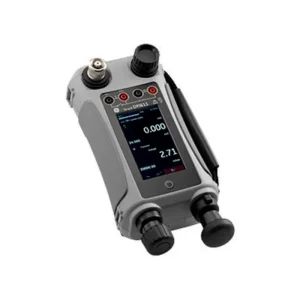
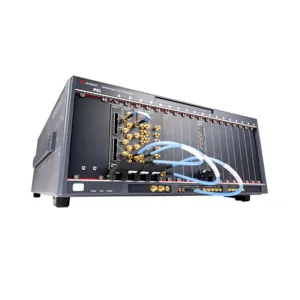
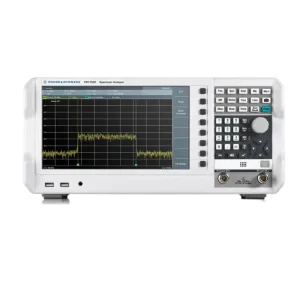
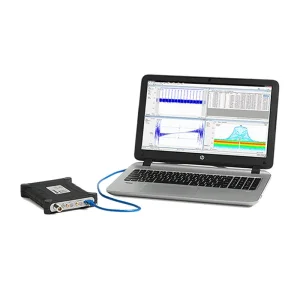
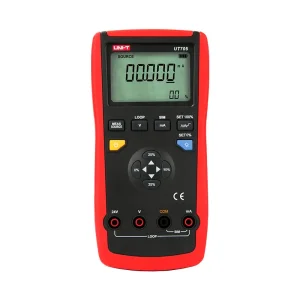
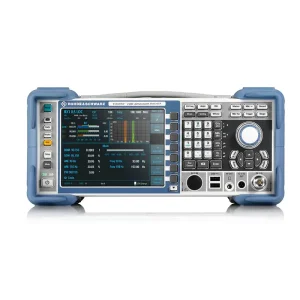
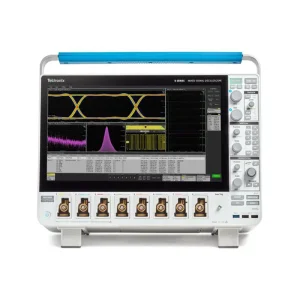
Send Inquiry NowExplore our expanded suite of process calibrators, precision spectrum analyzers, electrical calibration standards, and oscilloscopes, available with rapid export shipping and technical commissioning support.
Key answers addressing instrumentation specifications, international calibration certification, immersion depths, and logistics workflows for engineering directors and procurement managers in Salto.
All precision temperature calibrators exported by our facilities are calibrated under ISO/IEC 17025 accredited laboratories. The calibration hierarchy traces directly through the National Institute of Metrology (NIM) of China, which holds mutual recognition agreements under the CIPM MRA (Comité International des Poids et Mesures). This mutual recognition is accepted by LATU (Laboratorio Tecnológico del Uruguay) and regional Mercosur standards organizations without necessitating secondary domestic recertification upon arrival.
Stem conduction is a primary source of measurement error when calibrating short-stem sanitary probes common in Salto's citrus pasteurizers and storage tanks. As a general metrological rule, the immersion depth should equal at least 15 times the outer diameter of the sensor sheath plus the physical length of the internal sensing element (typically 5mm to 10mm for thin-film Pt100s). For short probes that cannot satisfy this depth, we recommend our specialized high-gradient compensating inserts or stirred micro-bath configurations with active thermal insulation collars.
Dry-block calibrators offer unparalleled field portability, rapid heating and cooling cycles (e.g., -35°C to 150°C in under 15 minutes), and zero fluid contamination risks, making them the preferred choice for turbine bearing checks at Salto Grande and cleanroom pharmaceutical lines. Conversely, liquid micro-baths are indispensable for calibrating irregularly shaped, curved, or multi-probe assemblies where custom-machined dry-block inserts cannot provide uniform thermal contact.
Every instrument dispatched to the Salto market undergoes rigorous pre-shipment factory acceptance testing (FAT). Shipments include: (1) Certificate of Calibration with documented uncertainty figures; (2) Serial-traceable inspection reports and multi-angle high-resolution photographs; (3) Full commercial invoice and packing list optimized for Uruguayan customs clearance. For physical transport, units are encased in shock-mounted, IP67 waterproof flight cases reinforced with custom high-density EVA foam inserts designed for maritime or air cargo handling.
Under normal operating conditions in industrial regions like Salto—which experiences high summer humidity and variable ambient temperatures—we advise an annual (12-month) recalibration cycle. For units exposed to harsh environments, such as continuous turbine hall vibrations or chemical exposure near citrus processing lines, interim 6-month checks using an external calibrated reference standard (such as a Secondary Standard PRT) are recommended to monitor sensor drift.
Yes. In addition to standard multi-hole metric and imperial sleeves (e.g., 3mm, 6mm, 1/4", 3/8"), our CNC machining centers fabricate customized high-conductivity aluminum or copper inserts tailored to the exact diameter, depth, and layout requirements of your proprietary industrial probes, ensuring maximum thermal coupling and minimal radial gradient.