China’s AC power analyzer market is becoming more specialized in 2026. Manufacturers now serve factories, laboratories, renewable energy projects, and advanced electronics testing. This guide introduces ten leading Chinese companies associated with Ac Power Analyzers and their practical strengths.
The evaluation considers measurement accuracy, voltage and current ranges, bandwidth, sampling speed, harmonic analysis, and communication interfaces. Calibration support matters as much as a polished specification sheet. So does the analyzer’s performance beside a noisy inverter or a rapidly changing motor load. Product documentation, testing experience, service capability, and visible industry references also shape the selection.
No list is perfect.
Market positions can change quickly. Some manufacturers publish detailed technical evidence, while others provide less accessible information. That difference does not automatically prove weaker engineering, but it deserves careful review. Buyers should verify calibration certificates, applicable standards, software functions, warranty terms, and local support before purchasing. A laboratory may prioritize phase accuracy and traceability. A production line may need rugged operation and fast data export. These are not identical requirements.
This overview is designed to support informed comparison rather than replace technical evaluation. It draws attention to manufacturers with notable capabilities, product coverage, and application experience in China’s power measurement sector. Readers should confirm current models and specifications directly with suppliers. Field trials remain valuable. Real equipment can reveal limitations that brochures overlook.
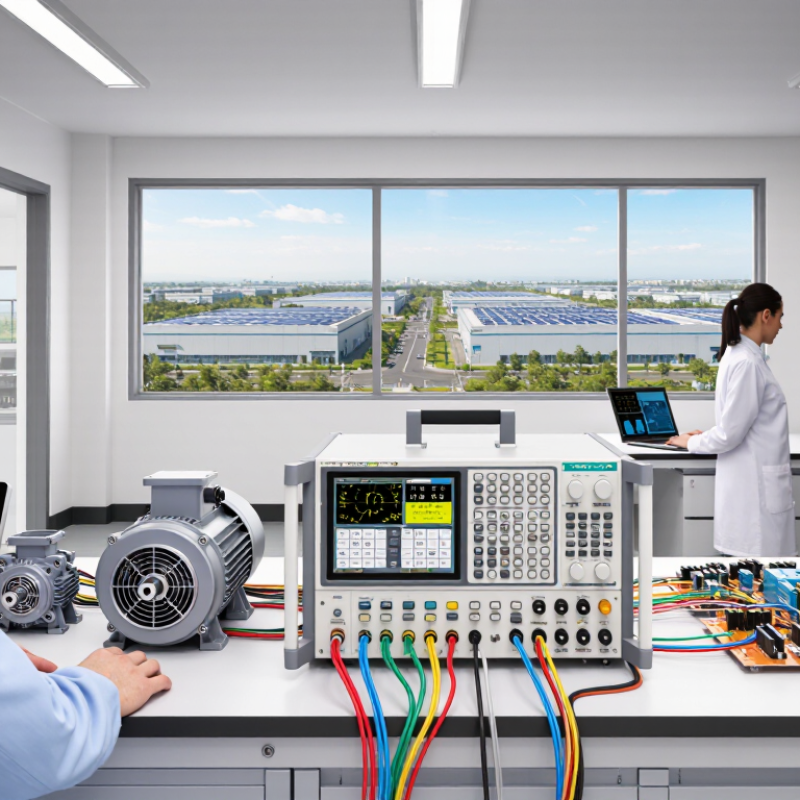
Selecting among China’s top AC power analyzer manufacturers in 2026 requires more than comparing display size or channel count. A serious analyzer should state whether its 0.1% accuracy applies to reading, range, or full scale. These are not interchangeable. IEC 61000-4-30:2015 defines measurement methods for frequency, voltage magnitude, dips, swells, interruptions, and harmonics. For laboratory checks, a 0.1% reading specification can reveal small voltage losses across a loaded cable.
Frequency is equally important. Most instruments support 50 and 60 Hz, while advanced models track frequency deviation and phase angle continuously. IEEE 1459-2010 provides widely used definitions for active, reactive, and apparent power, plus power factor under distorted waveforms. Core metrics should include RMS voltage and current, real power, demand, energy, crest factor, total harmonic distortion, and unbalance. Keep the wiring short.
Field experience shows that measurement errors often come from setup, not the analyzer. A loose voltage lead, incorrect current-probe direction, or unstable reference can distort results. Temperature also matters. I would verify zero readings before every test, then compare results with a calibrated reference when possible. That step feels slow, but it prevents confident mistakes. Specifications still need skepticism. A perfect number on a noisy panel may be less useful than a stable, traceable measurement.
A 0.1% specification needs clarification. It may describe reading accuracy, range accuracy, or full-scale accuracy. These values are different. For a loaded cable, 0.1% reading accuracy can reveal small voltage losses. Request test conditions and uncertainty data. A perfect number is not always trustworthy.
It should measure RMS voltage, RMS current, active power, reactive power, apparent power, demand, energy, and power factor. Crest factor, total harmonic distortion, and unbalance are also useful. The display should remain readable during motor starts. Crowded waveforms can expose weak software design.
Electrical systems commonly use 50 or 60 Hz. The analyzer should identify frequency deviation and track phase angle when needed. Continuous tracking helps during changing loads. Frequency support alone proves little. Test both nominal frequencies.
It covers frequency, voltage magnitude, dips, swells, interruptions, harmonics, and unbalance. Class A capability can support demanding industrial audits. Ask for the complete compliance report. A certificate alone may hide important test conditions. Check sampling, synchronization, uncertainty, and event aggregation.
It defines active, reactive, and apparent power, including distorted waveforms. A useful analyzer should report power factor and harmonic power clearly. This matters with converters, chargers, and variable-speed drives. Sinusoidal loads are easier. Distorted loads require closer inspection.
Test low, medium, and high power. Some instruments resolve milliwatts well but struggle near range limits. Others handle industrial current but lose low-level detail. Use a stable source and a trusted reference. Range-switching errors may appear only at light loads.
It can reveal behavior from inverters, converters, chargers, and drives. The analyzer should show individual harmonic orders, total harmonic distortion, and changing waveforms. Sampling speed and windowing methods matter. A wide frequency range is not enough. Ask for uncertainty data.
Many errors begin with wiring. A loose voltage lead can distort readings. Reversed current-probe direction can change power results. An unstable reference can create false confidence. Keep wiring short. Verify zero readings before every test. Compare results with a calibrated reference when possible.
Look for traceable calibration records and stated uncertainty. Procedures based on ISO/IEC 17025 can improve confidence. Annual calibration may suit normal use. Harsh factory conditions may require shorter intervals. Review sensor compatibility, safety ratings, storage, exports, and technical support. Document limitations before approval. That step feels slow, but it prevents confident mistakes.
This guide presents a practical overview of Ac Power Analyzers and the key factors shaping China’s 2026 market. It explains essential concepts such as 0.1% measurement accuracy, 50/60 Hz systems, voltage, current, power, power factor, energy, phase angle, and harmonic distortion. It also introduces IEC 61000-4-30 and IEEE 1459 as important references for evaluating measurement quality, reliability, and compatibility across different testing environments.
The comparison of the top ten manufacturers focuses on measurable performance rather than brand promotion, including bandwidth, sampling rate, accuracy, power range, 50th-harmonic analysis, calibration capability, and data-processing functions. The guide further highlights purchasing considerations for EV charging equipment, PV inverters, and smart-grid systems, where stable measurements and long-term consistency are essential. Readers can use these criteria to match analyzer capabilities with laboratory testing, production inspection, field maintenance, and advanced power-quality monitoring requirements.

