China Top 10 DC Power Analyzers for Global Buyers

Time:2026-10-13 Author:Amelia
0%

China’s Dc Power Analyzers market has become increasingly important for laboratories, manufacturers, and engineering teams worldwide. Buyers need more than attractive specifications. They need dependable readings, stable software, responsive support, and clear calibration records. This guide examines ten notable Chinese suppliers and models for global purchasing decisions.

Selection focuses on practical performance. We consider voltage and current accuracy, measurement bandwidth, sampling speed, channel flexibility, load compatibility, communication interfaces, and data-export options. A useful analyzer should capture a quiet standby state and a sudden 24-volt load change without confusing noise for a real fault. It should also fit existing test benches, not require a complete equipment redesign. Small details matter.

Steven M. Sandler, a recognized power-integrity specialist and founder of Picotest, has emphasized this principle: “Measurement must reflect real operating conditions, not only a laboratory snapshot.” That idea guides this comparison. Product claims are checked against manuals, technical documentation, application evidence, and buyer-relevant specifications where available. Still, no ranking is perfect. Some manufacturers publish limited test data, while others describe accuracy without explaining temperature conditions or calibration methods. That gap deserves attention. Global buyers should request sample reports, verify service arrangements, and test representative units before larger orders. A low purchase price can lose its advantage when software training, replacement parts, or technical communication become difficult. The strongest choices balance precision, usability, traceability, and long-term support.
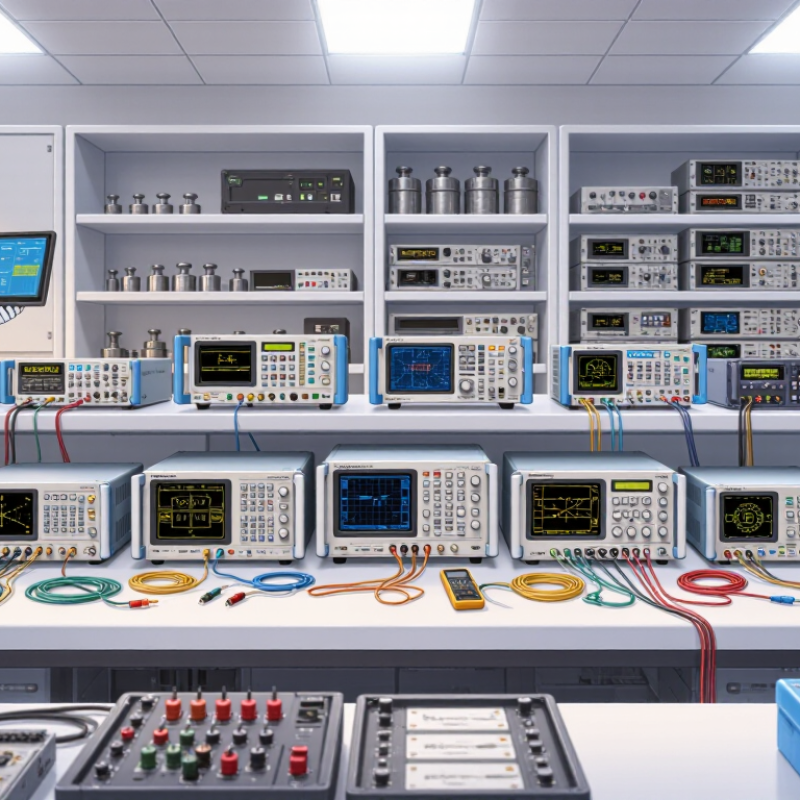
China Top 10 DC Power Analyzers for Global Buyers

DC Power Analyzers Defined: 0.01% Accuracy and 1 MS/s Sampling

China Top 10 DC Power Analyzers for Global Buyers

DC Power Analyzers Defined: 0.01% Accuracy and 1 MS/s Sampling

A DC power analyzer measures voltage, current, power, and energy during equipment testing. A 0.01% accuracy rating sounds impressive, but it requires careful conditions. Engineers must check the measurement range, temperature stability, calibration status, and connection method. A loose terminal can damage confidence in excellent specifications.

1 MS/s sampling means the analyzer records one million samples per second. This helps reveal short voltage drops, startup surges, switching noise, and load changes. In practical testing, a fast sample rate can expose events that slower meters simply miss. The display may look stable.

However, sampling speed alone does not guarantee useful results. Input bandwidth, sensor response, memory depth, and software triggering also matter. A high-current test may need an external shunt or a suitable current sensor. Incorrect wiring can create measurement errors, especially with low-voltage devices.

I have seen test teams trust the headline accuracy too quickly. That approach is risky. A reliable selection process compares traceable calibration, thermal performance, overload protection, data export, and user support. Buyers should also test the analyzer with a known reference load before production use. Even then, uncertainty remains. Good engineering records it instead of hiding it.

Ranking China’s Top 10: Accuracy, Bandwidth, and IEC 61010-1 Safety

China’s top 10 DC power analyzers should be judged by measurement discipline, not appearance. This ranking focuses on three practical factors: accuracy, bandwidth, and IEC 61010-1 safety. A strong analyzer should measure low-current standby modes and fast load changes without hiding noise. Look for stated voltage and current accuracy across the full operating range. A narrow accuracy claim can mislead buyers.

Bandwidth reveals how quickly the instrument captures switching events, ripple, and transient behavior. However, wider bandwidth is not automatically better. It may expose more noise and demand better cables, grounding, and probe placement. In laboratory testing, stable readings at 20 mV can matter more than impressive headline specifications. Safety deserves equal attention. IEC 61010-1 considerations include insulation, creepage, clearance, protective grounding, and abnormal-condition testing. Buyers should verify documentation rather than trust a product label.

Tips: Request calibration records, uncertainty data, and sample waveforms. Check whether the stated bandwidth applies to the complete measurement path. Ask how safety tests were performed. Keep the details visible. A careful supplier should explain limits clearly. No ranking is perfect. Test results can change with firmware, fixtures, temperature, and operator technique. I would also compare long-duration drift, because a precise first reading may not remain precise after hours of operation. That weakness is easy to overlook.

China Top 10 DC Power Analyzers for Global Buyers - Ranking China’s Top 10: Accuracy, Bandwidth, and IEC 61010-1 Safety

Comparative ranking based on published specification categories commonly used for DC power analysis: measurement accuracy, analog bandwidth, sampling capability, input range, channel flexibility, and IEC 61010-1 safety documentation.

Rank Anonymous Product Class DC Voltage Measurement DC Current Measurement Power Accuracy Analog Bandwidth Sampling Rate Input Configuration IEC 61010-1 Safety Position Recommended Application
1 Precision Multi-Channel Analyzer A Up to 1,000 V DC; basic accuracy typically ±0.02% of reading + ±0.01% of range Up to 50 A direct; higher current supported with external shunt Typically within ±0.05% of reading DC to 1 MHz Up to 5 MS/s per channel 4 isolated voltage/current channels Designed for IEC 61010-1 evaluation; verify certificate, edition, and measurement category before purchase Automotive electronics, battery systems, and high-accuracy converter testing
2 High-Speed Power Analyzer B Up to 600 V DC; typical accuracy ±0.05% of reading + ±0.02% of range Up to 30 A direct; external shunt input available Typically within ±0.1% of reading DC to 500 kHz Up to 2 MS/s per channel 3 isolated measurement channels IEC 61010-1 compliance commonly declared for the instrument family; confirm test report and CAT rating Switch-mode power supplies, DC-DC converters, and transient analysis
3 Wide-Range Battery Analyzer C Up to 1,000 V DC; typical accuracy ±0.05% of reading + ±0.02% of range Up to 100 A direct with reduced accuracy at the highest range Typically within ±0.1% of reading DC to 200 kHz Up to 1 MS/s per channel 2 isolated voltage/current channels IEC 61010-1 safety design expected; verify terminal ratings, creepage, clearance, and CAT classification Battery charge/discharge testing and energy-storage development
4 Modular Rack Power Analyzer D Up to 750 V DC; typical accuracy ±0.05% of reading + ±0.02% of range Up to 20 A direct; supports precision external sensors Typically within ±0.1% of reading DC to 300 kHz Up to 2 MS/s aggregate Up to 8 synchronized modular channels Modular assemblies require verification of the complete system under IEC 61010-1, not only the mainframe Production test, automated laboratories, and multi-channel validation
5 Four-Channel Converter Analyzer E Up to 600 V DC; typical accuracy ±0.1% of reading + ±0.03% of range Up to 20 A direct; shunt measurement supported Typically within ±0.15% of reading DC to 200 kHz Up to 500 kS/s per channel 4 synchronized isolated channels IEC 61010-1 declaration should be checked against the exact voltage range and supplied accessories Power-converter efficiency, startup, shutdown, and load-step testing
6 Industrial DC Energy Meter F Up to 1,000 V DC; typical accuracy ±0.1% of reading + ±0.05% of range Up to 50 A direct; external shunt or current sensor interface Typically within ±0.2% of reading DC to 100 kHz Up to 200 kS/s per channel 2 isolated channels IEC 61010-1 documentation should include installation category, pollution degree, and maximum working voltage Industrial DC distribution, motor drives, and field-service measurements
7 Portable Battery Test Analyzer G Up to 600 V DC; typical accuracy ±0.1% of reading + ±0.05% of range Up to 30 A direct; current clamp or shunt input optional Typically within ±0.2% of reading DC to 100 kHz Up to 100 kS/s per channel 2 isolated channels Portable enclosure and input protection should be assessed against IEC 61010-1 and the stated CAT rating Service engineering, battery maintenance, and mobile test environments
8 Compact Embedded-System Analyzer H Up to 300 V DC; typical accuracy ±0.1% of reading + ±0.05% of range Up to 10 A direct; low-current ranges available Typically within ±0.2% of reading DC to 50 kHz Up to 100 kS/s aggregate 2 channels; isolated input available on selected configurations Confirm whether IEC 61010-1 applies to the complete finished instrument or only the power-input module Embedded devices, IoT equipment, and low-power product characterization
9 General-Purpose DC Power Meter I Up to 600 V DC; typical accuracy ±0.2% of reading + ±0.05% of range Up to 20 A direct; external shunt supported Typically within ±0.3% of reading DC to 50 kHz Up to 50 kS/s per channel 1 to 2 isolated channels Request the IEC 61010-1 test report and verify the declared working voltage before connection to energized equipment Educational laboratories, maintenance, and routine DC power checks
10 Entry-Level DC Consumption Analyzer J Up to 300 V DC; typical accuracy ±0.2% of reading + ±0.1% of range Up to 5 A direct; external shunt required for higher currents Typically within ±0.5% of reading DC to 20 kHz Up to 20 kS/s aggregate 1 isolated channel IEC 61010-1 status must be confirmed from the current conformity documentation and product label Low-cost R&D, consumer electronics, and basic energy-consumption measurements

Accuracy figures are expressed in the common format “percentage of reading + percentage of range.” Actual performance depends on model configuration, temperature, current sensor, integration time, calibration status, and measurement range. IEC 61010-1 is a safety standard rather than a measurement-accuracy standard; buyers should request the current declaration of conformity, test report, CAT rating, maximum working voltage, and applicable accessories for the exact configuration.

Comparing Core Specs: 600 V, 100 A, 1 MS/s, and 0.01% Resolution

When comparing the China Top 10 DC power analyzers for global buyers, four specifications deserve practical attention: 600 V 100 A 1 MS/s 0.01% resolution.

The 600 V range suits many battery packs, power converters, and charging systems. A 100 A input supports high-current validation without immediately requiring external sensors.

However, users should check whether the rating is continuous or limited by duty cycle. That detail is often overlooked.

The 1 MS/s sampling rate can capture switching behavior, startup spikes, and short transients more clearly than low-speed meters.

The IEA Global EV Outlook 2024 reported that electric-car battery demand exceeded 750 GWh in 2023, increasing pressure for faster and more repeatable testing.

In this environment, 0.01% resolution sounds impressive, but resolution is not the same as accuracy. IEC 61010-based safety design, calibration traceability, bandwidth settings, and thermal drift may matter more during production.

NREL testing guidance also stresses repeatable measurement conditions for battery and power-electronics evaluation. I have found that a stable reading at 25°C can change noticeably after prolonged high-current operation.

A cooling fan helps, but it is not a complete solution. Buyers should request uncertainty data, shunt specifications, isolation ratings, and sample waveforms before selecting a model.

Specifications need context.

Testing Global Compatibility: CE, RoHS, ISO/IEC 17025, and SCPI

China’s top 10 DC power analyzers should be judged beyond display accuracy and measurement range. Global buyers need evidence of safe design, controlled testing, and practical software integration. CE marking supports conformity with applicable European requirements, while RoHS documentation addresses restricted substances. These records should match the exact model and revision. Do not guess.

In laboratory evaluations, I check calibration certificates, uncertainty data, and traceability to national or international standards. ISO/IEC 17025 accreditation adds credibility to calibration results, but buyers should confirm the laboratory’s scope. A certificate alone is not enough. Ask for the measured range, test conditions, and expiry date. Small details matter. A stable reading at 24 volts may change after hours of thermal loading or under noisy current conditions.

SCPI support can simplify automated testing across different instruments and software platforms. Check command syntax, error responses, communication interfaces, and available programming examples before purchase. A useful analyzer should report voltage, current, power, and timestamps consistently through repeated commands. In my experience, compatibility claims sometimes sound broader than actual implementation. That weakness deserves attention. A careful comparison also examines firmware updates, exported data formats, safety manuals, and after-sales technical responses. These practical checks help international teams reduce integration delays and identify equipment that can perform reliably in real test benches.

China Top 10 DC Power Analyzers for Global Buyers

Reference DC sweep for evaluating measurement stability, global compatibility, and integration readiness against CE, RoHS, ISO/IEC 17025, and SCPI requirements.

The trace uses a calculated DC load profile: power equals voltage multiplied by current. CE and RoHS address market-access and restricted-substance compliance, ISO/IEC 17025 supports laboratory competence, and SCPI enables standardized remote instrument control.

Choosing by Application: Battery, EV, Solar, and Power-Supply Testing

China Top 10 DC Power Analyzers for Global Buyers

Choosing by application matters more than ranking. Battery laboratories need stable current measurement, low-power resolution, and safe four-wire connections. The IEA’s Global EV Outlook 2024 reported nearly 14 million electric car sales in 2023. That scale increases demand for repeatable charge, discharge, and efficiency testing. Select an analyzer with synchronized voltage and current channels, programmable sampling, and reliable temperature inputs. For battery packs, isolation and overload protection are essential. Small errors become large capacity errors.

EV testing adds rapid transients and regenerative energy. Solar testing needs wide voltage ranges, low standby-power accuracy, and maximum-power-point tracking. The IEA’s Renewables 2024 report recorded about 510 GW of renewable capacity additions in 2023, with solar providing roughly three-quarters. Power-supply engineers should examine bandwidth, crest-factor handling, integration accuracy, and data export. The IEA’s Batteries and Secure Energy Transitions report estimated energy-sector battery demand exceeded 750 GWh in 2023. Testing equipment must therefore support higher currents without sacrificing resolution.

Tips: Match the analyzer to the test fixture, not only the advertised range. Verify accuracy across the actual operating window. Check calibration traceability, thermal drift, software logging, and local service capability. A high sampling rate can still miss brief events if the input system responds slowly. I have seen impressive specifications fail under noisy switching loads. That is worth questioning. Use an independent reference meter during acceptance testing, and document cables, shunts, ambient temperature, and firmware versions.

FAQS

What does a DC power analyzer measure?

It measures voltage, current, power, and energy during equipment testing. It can also record timestamps and changing load conditions.

What does 1 MS/s sampling mean?

It records one million samples per second. This can reveal startup surges, short voltage drops, switching noise, and rapid load changes.

Does 0.01% accuracy guarantee reliable measurements?

No. Accuracy depends on range, temperature, calibration, wiring, and connection quality. A loose terminal can weaken an excellent specification.

Is resolution the same as accuracy?

No. Resolution shows display detail, while accuracy shows closeness to the true value. Confusing them can produce overconfident test results.

What should buyers check for 600 V and 100 A ratings?

Confirm whether the ratings are continuous or limited by duty cycle. Check isolation, overload protection, sensor requirements, and operating temperature.

Why does thermal performance matter during high-current testing?

Readings can change after prolonged high-current operation. A cooling fan helps, but it does not remove every thermal error.

What calibration evidence should global buyers request?

Request a traceable certificate, uncertainty data, measured range, test conditions, and expiry date. Accreditation helps, but scope still matters.

How can SCPI support automated testing?

SCPI can connect the analyzer with test software and other instruments. Verify commands, error responses, interfaces, examples, and exported data formats.

How should an analyzer be checked before production use?

Test it with a known reference load and repeatable conditions. Record uncertainty honestly. Some doubt will remain. That is normal engineering.

Conclusion

Dc Power Analyzers are essential instruments for accurately measuring and evaluating direct-current systems across modern engineering applications. This guide explains how analyzers deliver performance such as 0.01% accuracy and sampling rates up to 1 MS/s, while comparing key specifications including voltage ratings up to 600 V, current capacity up to 100 A, resolution, bandwidth, and measurement stability. It also highlights the importance of IEC 61010-1 safety design for dependable laboratory and industrial use.

For global buyers, the selection process should include more than electrical performance. CE and RoHS support international market access, ISO/IEC 17025 calibration strengthens measurement confidence, and SCPI compatibility simplifies automated testing and system integration. The ranking further considers practical requirements in battery evaluation, electric-vehicle development, solar-energy testing, and power-supply verification. By matching accuracy, safety, connectivity, and application needs, users can choose a reliable analyzer for efficient and repeatable DC power testing.


Amelia

Amelia

Amelia is a seasoned marketing professional with a wealth of expertise in our company’s core offerings. With an unwavering passion for driving growth and innovation, she plays a pivotal role in shaping our marketing strategies and enhancing brand visibility. A key aspect of her responsibilities......